

Key Takeaways
- Major technology companies are actively moving away from traditional hand-held screens.
- Artificial intelligence, augmented reality, and wearable tech form the foundation of our next digital leap.
- Technology companies look past smartphones to create devices that blend naturally into our physical environments.
- Privacy, data security, and accessibility will be the biggest challenges as we adopt new connected hardware.
- The way we interact with friends, family, and our workspaces will completely transform over the next decade.
The Shift Away from Mobile Devices
For over a decade, pocket-sized screens have dictated how we work, play, and communicate. However, we are now reaching a turning point where tech giants envision future beyond smartphones. Companies realize that staring down at a glowing rectangle is not the ultimate end goal of human-computer interaction. Instead, they want to integrate digital experiences seamlessly into our everyday physical world.
- The Shift Away from Mobile Devices
- Wearable Technology and Smart Glasses
- The Role of Artificial Intelligence Everywhere
- Brain-Computer Interfaces Entering the Scene
- The Internet of Things Expanding Fast
- What This Means for Everyday Consumers
- Preparing for the Next Big Shift
- Conclusion
- Frequently Asked Questions
This transition involves a massive shift in research and development funding. Major players in the industry are pouring billions of dollars into new form factors. They want to free our hands and lift our eyes back up to the world around us. By eliminating the need to constantly pull a device out of your pocket, these companies hope to create a more natural and intuitive way to access information. This bold new direction means that the very concept of “going online” will soon feel outdated, as we will simply be connected by default through the environment around us. We are watching Silicon Valley imagine the next big thing, completely reimagining our relationship with digital tools.
Why We Need New Hardware
The push for new hardware comes from a basic human desire for better, more frictionless experiences. Current mobile devices, while incredibly powerful, act as bottlenecks. You have to stop what you are doing, unlock a screen, open an app, and type or tap to get what you need. This process breaks your concentration and removes you from your present moment. Industry leaders recognize this friction and want to build tools that work with us rather than interrupting us.
Creating new hardware also opens up fresh revenue streams for companies that have seen mobile device sales slow down. As markets become saturated, hardware manufacturers must innovate to keep growing. They are developing rings, watches, pins, and glasses that can do everything a phone can do, but faster and with less effort from the user. These new devices rely heavily on voice commands, gestures, and even eye-tracking to navigate menus. This fundamental change in hardware design will completely alter how we consume media, find directions, and communicate with our loved ones.
Reaching the Limits of Current Screens
We have pushed the traditional touch screen just about as far as it can go. Screens have become brighter, sharper, and faster, but they still trap information behind a pane of glass. When tech leaders plan for life after mobile phones, they look at the physical limitations of these screens. You can only make a phone so big before it no longer fits in a pocket, and you can only make a battery so dense before it becomes a safety hazard.
Furthermore, the constant need to look down at a screen causes physical strain and creates social barriers. People want to stay engaged with their surroundings while still accessing the vast knowledge of the internet. Foldable screens offered a temporary novelty, but they do not solve the underlying issue of the screen itself. The next logical step is to remove the physical boundary entirely. By projecting information directly into our field of view or whispering it directly into our ears, future devices will make the traditional flat screen feel as ancient as a rotary telephone.
Wearable Technology and Smart Glasses
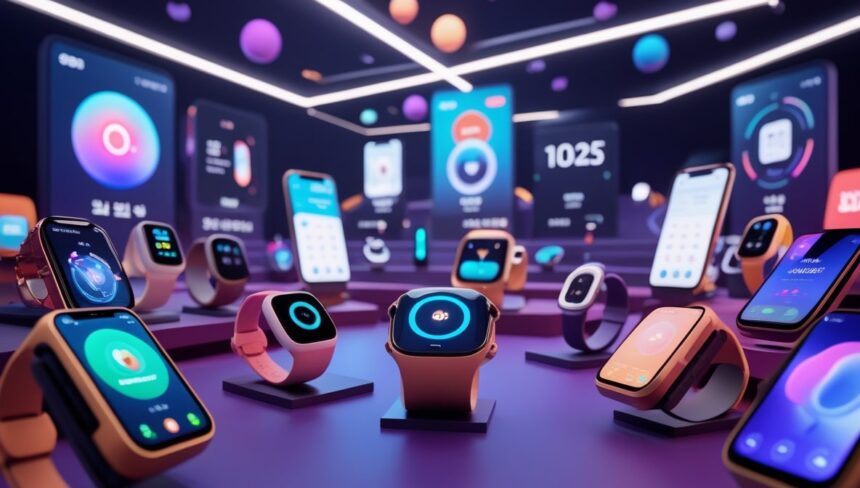
Wearable technology represents the most visible step toward this new era. While smartwatches have already gained massive popularity, they are just the beginning of a much larger trend. The ultimate goal is to move the primary computing interface from the wrist to the face. Smart glasses are currently the holy grail for hardware developers because they allow you to see digital information overlaid onto the real world without obstructing your vision.
These devices are becoming lighter, more stylish, and significantly more powerful. Early attempts at smart glasses were bulky and socially awkward, but modern iterations look almost identical to standard prescription eyewear. They feature tiny projectors, hidden microphones, and subtle cameras that understand what you are looking at. As these glasses become mainstream, they will replace the need for a separate camera, map, or notification center. You will simply walk down the street and see directions painted on the sidewalk, or look at a restaurant and instantly see its menu and reviews floating in the air.
Augmented Reality Changing Daily Life
Augmented reality (AR) is the software engine that will power our new wearable hardware. Unlike virtual reality, which blocks out the world, AR adds valuable context to what you already see. Imagine working on a complex project and having instruction manuals, diagrams, and video tutorials floating directly next to your workspace. Mechanics, surgeons, and engineers are already using early versions of this technology to improve their accuracy and efficiency.
For the average person, AR will make daily tasks incredibly simple. Grocery shopping will transform as your glasses guide you directly to the items on your list, highlighting them on the shelf and displaying nutritional information automatically. Learning a new language will become interactive, with real-time translations appearing as subtitles when someone speaks to you. As major tech brands design a post-phone world, they focus heavily on making these augmented experiences feel helpful rather than overwhelming. The key is delivering the right information at the exact right moment, seamlessly blending the digital and physical realms.
How AR Glasses Will Work
The mechanics behind AR glasses are remarkably complex, relying on a combination of spatial computing, tiny sensors, and rapid processing power. The glasses must map your environment in real-time, understanding the depth, shape, and lighting of the room you are in. This allows digital objects to anchor themselves to physical surfaces, so a virtual television stays on your actual wall even when you turn your head.
To control these glasses, users will rely on micro-gestures and eye tracking. Tiny cameras inside the frames watch where your pupils move, allowing you to select items simply by looking at them. You might pinch your fingers together in your lap to click, or swipe your hand lightly to scroll through a floating article. Voice commands will also play a massive role, with directional microphones picking up your whispers even in crowded rooms. This combination of intuitive controls means you will rarely have to raise your hands or touch a physical button to manage your digital life.
Virtual Reality Going Mainstream
While AR focuses on enhancing the real world, virtual reality (VR) offers complete immersion into entirely new environments. Historically viewed as a niche tool for heavy gamers, VR is rapidly expanding into education, fitness, and professional collaboration. When tech giants envision future beyond smartphones, they see VR headsets becoming as common as laptops for focused, deep work.
Imagine putting on a lightweight headset and instantly teleporting to a quiet, customized office space with multiple massive screens floating around you. You can collaborate with colleagues from across the globe in a virtual boardroom, reading their body language and making eye contact as if you were in the same room. Fitness applications allow you to box, dance, or play tennis with virtual coaches in stunning environments, making workouts vastly more engaging. As the hardware becomes more comfortable and affordable, VR will offer experiences that physical travel and traditional screens simply cannot match.
The Role of Artificial Intelligence Everywhere
Hardware is only half of the equation; artificial intelligence is the invisible brain that makes these new devices actually useful. The transition away from screens requires a system that can understand context, anticipate your needs, and communicate conversationally. AI acts as the connective tissue between you and your environment. Instead of navigating through folders and apps, you will simply tell your AI assistant what you want to accomplish, and it will handle the complex steps in the background.
This pervasive AI will learn your habits, preferences, and routines. It will know when you prefer quiet time and hold your notifications, or it will recognize when you are stressed and suggest a different route home to avoid traffic. This level of personalization means your technology will feel less like a tool and more like a dedicated, highly capable assistant. As artificial intelligence replaces basic phone tasks, the cognitive load of managing our digital lives will decrease significantly, freeing us up to focus on the things that truly matter.
Voice Assistants Becoming Smarter
We are moving far beyond the simple voice commands of setting timers and checking the weather. Next-generation voice assistants use advanced large language models to hold natural, multi-turn conversations. You will be able to speak to your devices just as you would speak to a human colleague. They will understand nuance, sarcasm, and complex logic, allowing you to brainstorm ideas, practice speeches, or analyze data simply by talking out loud.
These intelligent assistants will also possess long-term memory. If you mention that you are planning a trip to Japan next year, your assistant will remember this detail months later and proactively suggest flight deals or language learning tools. They will manage your schedule seamlessly, emailing contacts to negotiate meeting times and updating your calendar without you ever opening a scheduling application. This leap in capability transforms voice control from a frustrating gimmick into the primary way we interact with computers.
Seamless Integration into Our Homes
Our living spaces will become an extension of our digital ecosystem. Smart home technology will move past clunky apps and disparate hubs into a unified, AI-driven experience. Your house will recognize who is in the room and adjust the lighting, temperature, and background music to their specific preferences. Appliances will communicate with each other; your refrigerator might notice you are out of milk and automatically add it to your digital shopping list.
Security systems will become incredibly intuitive, using facial recognition and behavioral patterns to distinguish between family members, regular delivery drivers, and potential threats. Windows might automatically tint based on the position of the sun to save energy, while indoor sensors monitor air quality and adjust ventilation. This ambient computing environment means you will not need to carry a device around your house at all; the house itself becomes the interface, responding to your voice and presence automatically.
Anticipatory Computing Doing the Work
Anticipatory computing represents the next frontier of user experience. Instead of waiting for you to input a command, the system actively predicts what you need before you even ask. By analyzing data from your calendar, location, heart rate, and past behaviors, the technology can offer solutions proactively. If your smart glasses detect you are looking at a broken pipe under your sink, the system might automatically pull up a relevant repair video and offer to call a local plumber.
This predictive power extends to your professional life as well. Before you walk into a crucial meeting, your AI might summarize recent emails from the client, highlight key talking points, and display their recent company news. It removes the friction of searching and gathering information. When tech giants envision future beyond smartphones, they dream of systems that act as a proactive co-pilot for your daily life, drastically reducing the mental effort required to navigate a complex world.
Brain-Computer Interfaces Entering the Scene
Perhaps the most futuristic and ambitious development is the brain-computer interface (BCI). Companies are researching ways to link the human brain directly to digital networks. While this sounds like science fiction, early medical trials are already allowing paralyzed individuals to control computer cursors and robotic limbs simply by thinking about it. The long-term goal for consumer tech is to create non-invasive wearables, like headbands or earbuds, that can read neural signals and translate them into digital commands.
This technology would represent the ultimate elimination of friction. You would not need to speak, gesture, or tap; you would simply intend for something to happen, and the system would execute it. Imagine typing an entire email just by formulating the words in your mind, or skipping a song on your playlist with a fleeting thought. While consumer-ready BCIs are still many years away, the heavy investment in this sector shows exactly how far technology companies look past smartphones to find the absolute purest form of interaction.
Direct Mind to Machine Communication
Direct communication between your mind and your devices opens up incredible possibilities for accessibility and human enhancement. For people with speech or mobility impairments, BCIs offer a profound return to independence, allowing them to communicate and interact with the digital world effortlessly. Beyond medical applications, this technology could fundamentally change how we process information.
Instead of reading an article on a screen, you might eventually be able to stream concepts and data directly into your cognitive processing centers. It could accelerate learning, improve memory retention, and allow for completely new forms of creative expression. Musicians could compose symphonies by imagining the sounds, and designers could build 3D models simply by visualizing them. While ethical and safety hurdles remain massive, the raw potential of direct mind-to-machine interfaces keeps research teams highly motivated.
The Internet of Things Expanding Fast
The Internet of Things (IoT) is the vast network of physical objects embedded with sensors, software, and connectivity. As we move away from phones, the IoT will expand exponentially, turning everyday items into smart devices. Everything from your coffee mug to your running shoes will gather data and communicate with your central AI. This mesh of connected objects ensures that you are always supported by digital intelligence, no matter where you are or what you are holding.
This connectivity allows for incredible efficiency. Your clothes might communicate with your washing machine to ensure they are cleaned on the optimal cycle. Your toothbrush might track your dental health and send reports to your dentist. By distributing computing power across thousands of tiny, invisible devices, we remove the need for one central hub like a smartphone. The environment itself becomes smart, adapting and responding to your needs in real-time.
Smart Cities and Connected Cars
The expansion of connected technology goes far beyond our personal belongings; it is reshaping entire cities. Smart city infrastructure uses sensors embedded in roads, traffic lights, and public transport systems to optimize urban living. These systems monitor traffic flow, air quality, and energy consumption, making real-time adjustments to reduce congestion and pollution. Your personal AI will communicate with the city’s network to find you the fastest route, locate open parking spots, and alert you to public safety issues.
Connected vehicles play a massive role in this ecosystem. Cars are transforming into massive, rolling computers that communicate with the road and other vehicles. As autonomous driving technology improves, the interior of a car will stop looking like a cockpit and start looking like a living room or a mobile office. You will spend your commute relaxing, working, or watching media in VR, while the car handles the navigation. This integration of personal transit into the broader digital network is a key part of how tech leaders imagine life after mobile phones.
What This Means for Everyday Consumers
For the average person, this transition will feel gradual but incredibly profound. You will notice your screen time decreasing as you handle more tasks through voice, smart wearables, and ambient computing. The constant anxiety of missing a notification or losing your phone will fade, replaced by a calm confidence that your digital assistant has everything handled. Technology will move out of the foreground of our attention and into the background, supporting us silently rather than demanding our constant focus.
This shift will also democratize access to information. People who struggle with traditional computing interfaces, such as the elderly or those with certain disabilities, will find voice and gesture controls much more natural. We will spend more time looking up at the world and engaging directly with our physical surroundings. Ultimately, the goal is to make us feel more human and more connected to each other, ironically by using more advanced technology.
Changing How We Connect with Friends
Social media and digital communication will evolve drastically without smartphones. Instead of scrolling through feeds of curated photos on a tiny screen, social interactions will become spatial and deeply immersive. You might share a holographic memory with a friend, allowing them to walk around and experience a moment exactly as you did. Long-distance calls will feel like sitting in the same room, as lifelike avatars perfectly mimic your facial expressions and body language in a shared virtual space.
This new form of connection will prioritize shared experiences over passive consumption. You will watch movies together, play incredibly realistic virtual sports, or collaborate on art projects with friends scattered across the globe. By removing the glass barrier of the screen, technology will foster deeper empathy and stronger relationships, making digital interactions feel just as meaningful as physical ones.
Privacy and Security Concerns
With all of these incredible advancements come massive challenges regarding privacy and data security. If our glasses, homes, and cities are constantly watching, listening, and analyzing our behavior, who owns that data? Ensuring that our personal information is protected from hackers, corporations, and government surveillance will be the most critical hurdle of the next decade.
Companies must build robust, transparent privacy controls directly into the hardware. We need physical kill switches for microphones and cameras, and strict regulations on how biometric data is stored and shared. Consumers will have to weigh the incredible convenience of these new technologies against the loss of absolute privacy. Navigating this delicate balance will dictate how quickly and safely these new devices are adopted by the general public.
Preparing for the Next Big Shift
As consumers, preparing for this shift means staying curious and adaptable. You do not need to buy every piece of early-stage hardware, but understanding the trends will help you navigate the changing landscape. Pay attention to how companies handle your data and support platforms that prioritize user privacy and open standards.
Businesses must also adapt rapidly. Marketing strategies, website designs, and customer service models will all need to change when customers are interacting via voice and augmented reality rather than a web browser. The companies that thrive will be those that figure out how to provide value in this new, frictionless environment without being intrusive.
Table: Comparing the Smartphone Era to the Future of Computing
|
Feature |
Smartphone Era (Current) |
Future Era (Upcoming) |
|---|---|---|
|
Primary Interface |
Glass Touchscreen |
Voice, Gestures, Eye Tracking |
|
Form Factor |
Pocket-sized rectangle |
Smart Glasses, Rings, Contact Lenses |
|
Information Delivery |
Pull (Searching for info) |
Push (AI anticipates needs) |
|
Social Interaction |
2D Text and Video Calls |
3D Spatial Audio and Holograms |
|
Environment |
Device-centric |
Ambient and IoT integrated |
|
Data Input |
Thumbs typing on glass |
Voice dictation and BCI (Brain-Computer Interface) |
Conclusion
The era of staring down at our hands is slowly coming to a close. As tech giants envision future beyond smartphones, they are crafting a world where digital capabilities surround us naturally. Through the power of augmented reality, sophisticated AI, and seamless wearable technology, we are entering a phase of computing that promises to be more intuitive, immersive, and human-centric than ever before.
While the challenges of privacy, security, and ethical design are immense, the potential to enhance our daily lives is undeniable. We will connect more deeply, learn more rapidly, and interact with our environments in ways that currently seem like magic. Whether you are casually reading a blog on https://reelsaround.co.uk/ or diving deep into tech history, it is clear that our digital evolution is far from over. If you want to dive deeper into the historical context of mobile computing, you can always explore resources like the page for the smartphone on https://www.wikipedia.org/ related to this keyword “tech giants envision future beyond smartphones” to see just how far we have come, and how far we are about to go.
Frequently Asked Questions
What will replace smartphones in the future?
Smartphones will likely be replaced by a combination of wearable technologies, such as augmented reality glasses, smart rings, and earpieces, all powered by highly advanced artificial intelligence that understands voice and gesture commands.
When will we stop using mobile phones?
While mobile phones will not disappear overnight, industry experts predict a significant shift away from traditional screens toward wearable AR devices within the next 10 to 15 years.
How do tech giants envision future beyond smartphones?
They envision a world where digital information is layered naturally over the physical world using spatial computing, ambient AI in our homes, and intuitive wearables, completely removing the need to stare at a handheld screen.
Are smart glasses safe to use daily?
Yes, modern smart glasses are designed to be lightweight, comfortable, and safe for daily use. However, privacy concerns regarding built-in cameras and microphones remain a topic of ongoing debate and regulation.
Will artificial intelligence control our new devices?
AI will not “control” the devices in a malicious way, but it will act as the primary operating system. Instead of tapping icons, you will converse with an AI assistant that anticipates your needs and manages your digital tasks seamlessly in the background.