
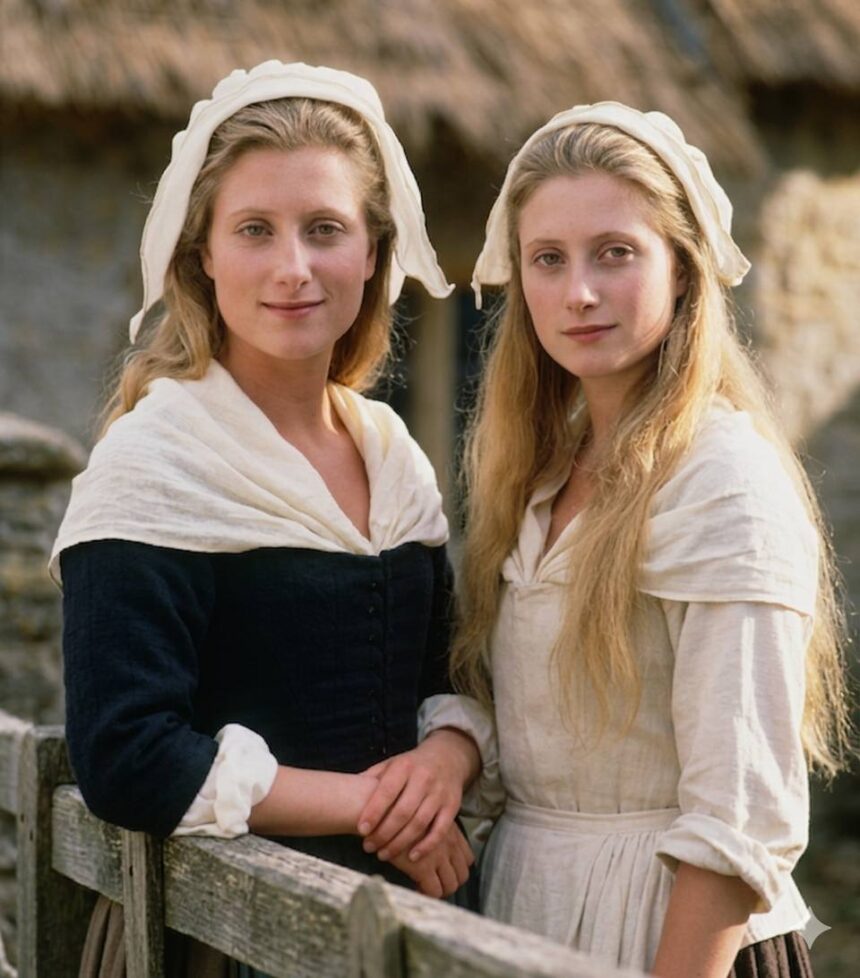

What stays with me about Susannah Harker is not fame, but dramatic precision, poise, and intelligence. This English actress built a disciplined career across film, television, theatre, and radio, leaving audiences with lasting quality.
- Who Is Susannah Harker?
- Early Life And Education / Family Background
- Career / Acting Career / Range Beyond Period Drama
- Breakthrough Roles / Best Known Roles
- Mattie Storin In House Of Cards
- Jane Bennet In Pride And Prejudice
- Theatre And Radio Work
- Personal Life / Family Life
- Filmography / Movies And TV Shows
- FAQ’s
Born Susannah Owens on 26 April 1965, she represents a quieter strain of British acting, where refined performances matter more than noise. Her work carries thoughtful storytelling, whether through intimate scenes, literary roles, or unexpectedly sharp emotional turns.
I often think first of Mattie Storin in House of Cards, because that 1990 role revealed control without stiffness. Later, Jane Bennet in the 1995 BBC adaptation showed how restraint can shape emotional force.
She also moves beyond acting labels: director, writer, and performer with an instinct for tonal balance. Across projects, I notice how carefully Susannah Harker protects character over spectacle, giving even familiar material a more grounded pulse.
This introduction looks at the craft behind the name, not just the credits. From Susannah Owens to Susannah Harker, the thread is clear: measured artistry, emotional depth, and a career shaped by choices that endure.
Who Is Susannah Harker?
To me, Susannah Harker stands apart because her work feels inward, exact, and quietly assured. She is an English actress whose presence across television, theatre, film, and radio reveals discipline more than display or noise.
Many performers become known through visibility alone, but Susannah Harker became especially recognised through restraint. Watching her means noticing choices: pauses, glances, and emotional weight shaped by an actress who trusts subtle expression over obvious declaration.
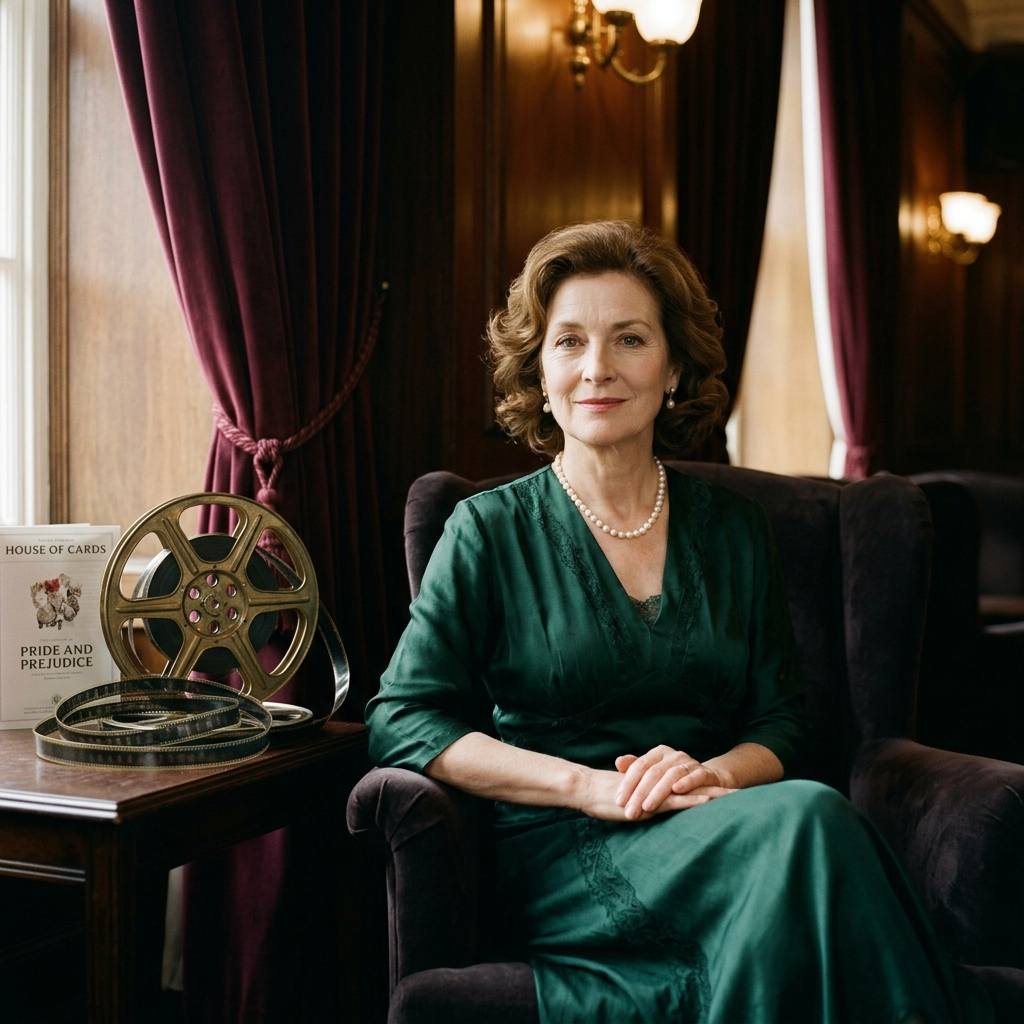
Her artistic identity sharpened through playing women who seem composed yet carry hidden motion. That quality shaped Mattie Storin in House of Cards, where intelligence and vulnerability met ambition, and the performance still feels psychologically alert.
A different register appeared in Jane Bennet, where softness never weakened perception. In the 1995 BBC adaptation of Pride and Prejudice, Susannah Harker made gentleness feel active, turning stillness into character and emotional intention.
So when asking, Who is Susannah Harker, I think first of an artist before a celebrity. She is an English actress known for craft, with work across television, theatre, film, and radio still resonating today.
Early Life And Education / Family Background
I always return to how Susannah Harker entered everyday life already surrounded by performing arts. Born as Susannah Owens, she was the daughter of an actor and an actress, with parents deeply shaped by acting.
She was born on 26 April 1965, also written April 26, 1965, in Hampstead, London, England, UK. That grounding in North London mattered, though her child years stretched into a disciplined artistic environment.
Her education feels important because convent school, convent boarding school, and nuns in Sussex suggest structure before freedom. Raised among Catholics, she was educated with restraint, which later informed public image, screen presence, and emotional control.
What interests me most is the bridge between inheritance and training. Richard Owens, Polly Adams, Caroline Harker, a younger sister and sibling, all connect her to family history, while Joseph Harker extends that lineage further.
At the Central School of Speech and Drama, one of Britain’s noted drama schools, formal training sharpened clarity, control, intelligence, and emotional subtlety. That creative inheritance, touched by a descendant, scenic artist, theatre designer, and stagecraft, became vocation.
Remaining Unused Words: established herself, built a career, pursued acting, performance, discipline, realities of the profession, theatrical continuity, training, relatives
Remaining Word Count: 9
Career / Acting Career / Range Beyond Period Drama
What I admire in Susannah Harker is range. Her career never settled into one lane, because acting career choices moved between contemporary works, classic works, stage, movies, TV series, and sharply focused radio performances.
Early television placed her beside Clive Owen in Chancer during 1990–1991, while journalist energy defined Mattie Storin in the original House of Cards. Soon after, Dinah Morris in 1991 Adam Bede widened expectations around literary roles.
She then starred as Jane Bennet in the 1995 TV adaptation of Jane Austen‘s Pride and Prejudice, before becoming Emma Fitzgerald, love interest to Superintendent Tyburn in Heat of the Sun during 1998.
A more unexpected thread came through sound. As Clare Keightley in 2003, she entered the audio version of Doctor Who story Shada alongside Paul McGann. Later, Sapphire, Big Finish Productions, and Sapphire & Steel deepened that medium.
By 2005, 2008, December 2011, 2012, early 2014, 2015, and 2021, she moved through plays, CD, Young James Herriot, Sue, Mike Leigh, Abigail’s Party, Gate Theatre, Dublin, The Vortex, Noël Coward, BBC Radio 4, Ibsen, John Gabriel Borkman, Kris, and Barred.
Breakthrough Roles / Best Known Roles
Some actors gather attention slowly, but breakthrough roles can also arrive through contrast. For Susannah Harker, the best known roles are not loud ones. They rely on restraint, making performance more memorable than overt display.
The first major shift came with Mattie Storin in House of Cards, a British drama whose sharpness matched her precision. That role carried a BAFTA TV Award and BAFTA Television Award nomination conversation almost immediately.
Then came Jane Bennet in Pride and Prejudice, where the emotional temperature changed completely. In the BBC adaptation and miniseries from 1995, she made reserve feel active, which is harder than many viewers realize.
I find that duality central to understanding her screen identity. One role leans toward political pressure and moral risk; the other toward tenderness and composure. Together, they explain why an English actress could define separate emotional registers.
Looking back at 1990 and later success, the pattern feels clear. Susannah Harker became associated with roles that endure because they reward close attention. Her strongest work remains character-driven, elegant, and quietly exact in construction.
Mattie Storin In House Of Cards
When I revisit Mattie Storin, I notice how Susannah Harker avoids easy signals. In House of Cards, her performance carries intelligence without vanity, and that balance helps the character move through power games, secrecy, and institutional pressure.
The role mattered because Mattie Storin was never just an observer. She became ambitious, questioning, and morally engaged, giving the British drama its uneasy conscience. That tension still feels modern when compared with flatter political narratives.
By 1990, the English actress had found a key role that would define critical conversations. A BAFTA TV Award mention and BAFTA Television Award nomination signaled formal recognition, but the true reward was a stronger professional reputation.
What impresses me most is the emotional architecture. Emotional sharpness, seriousness, and manipulation sit beside vulnerability, so the work never feels schematic. In the original series, she made ethical conflict visible without overstating any reaction.
Even today, discussions about her career often return here, and rightly so. The role remains memorable, central, and cemented within assessments of impressive British actresses of her generation, because it still reveals disciplined dramatic judgment.
Jane Bennet In Pride And Prejudice
What makes Jane Bennet linger is not softness alone. In Pride and Prejudice, Susannah Harker gave the role gentleness, sincerity, and quiet dignity, yet also a steelier awareness that stops the character becoming decorative.
The 1995 BBC miniseries and TV adaptation invited broad affection, especially from Janeites, but her portrayal resisted sentimentality. I have always felt she made feeling visible through pause, not speech, which sharpened every exchange.
That mattered because Elizabeth naturally carries the stronger dramatic force. Even so, playing Jane as fully inward rather than passive gave the celebrated adaptation its emotional counterweight. The result remains iconic without ever turning self-conscious.
There is also the unusual family echo. Her mother, Polly Adams, appeared in an earlier BBC adaptation from 1967, creating a theatrical echo and family connection that fascinates viewers interested in British television history and performance lineage.
For many, this is the role she is best known for, and I understand why. As actor, writer, and actress, Susannah Harker left fascinated fans with a remembered production, a living character, and emotional honesty.
Theatre And Radio Work
Her theatre work often tells me more than screen summaries do. Watching how Susannah Harker moves between stage and radio, I see a performer who values process, language, and the exact weight of spoken rhythm.
In 2005, Simon Stephens‘s On the Shore of the Wide World at the Royal National Theatre and broader National Theatre culture highlighted commitment to substantial dramatic work. Good stage acting demands precision that television sometimes disguises.
Then 2008 brought Gwendoline in Charles Wood‘s Jingo at the Finborough Theatre, while later titles like Three Sisters, Abigail’s Party, The Vortex, The Blinding Light, and The Glass Menagerie showed appetite for demanding text.
Her sound work deserves equal notice. Through BBC Radio 4, Ibsen, John Gabriel Borkman, Miss Ella Rentheim, Kris, and Barred in 2015 and 2021, she treated audio drama as craft rather than secondary visibility.
I hear the same discipline in Shada, Sapphire & Steel, and other audio projects. The voice, articulation, intelligence, measured delivery, expression, and vocal control reveal technique, control, and a resistance to chasing quick visibility over substance.
Personal Life / Family Life
Her personal life has always seemed less performative than many biographies suggest. Susannah Harker keeps family life adjacent to public attention, never central to it, which may explain why curiosity about her remains respectful rather than invasive.
She is part of a theatrical lineage through Joseph Harker, a great-great-granddaughter connection to an artist and theatrical scene designer. That inheritance gives her story a longer arc than a simple list of credits suggests.
She was married to Iain Glen from 1993 until 2004. Later, a relationship with Paul McGann from 2006 to 2008 entered the record, though both details stay secondary beside her body of work.
The family map extends further through sisters Nelly Harker and Caroline Harker, both actresses, and through Gordon Harker, a great uncle with a notable career as an actor. That web makes performance feel inherited.
She is also a spouse, now divorced, and a parent to children, including Finlay, described elsewhere as one son and one child. Despite public interest, biographies, and a visible public life, she projects unusual privacy and dignity.
Filmography / Movies And TV Shows
Any real look at her filmography shows how varied the record is. Across movies and TV shows, the movement from literary adaptation to thriller, short form, and prestige drama makes her choices feel exploratory rather than merely strategic.
Early entries include Burke & Wills with Bessie Wills in 1985, White Mischief and a young girl in 1987, The Lady’s Not for Burning with Alizon Eliot, and A Dry White Season as Suzette du Toit.
That screen path widened through The Crucifer of Blood, Irene St. Claire, Surviving Picasso, Marie-Therese, Intimacy, 2001, Susan, Jay’s wife, Trance, Sarah Lamb, Offending Angels, Paris, and other less discussed film appearances.
Television added equally strong variety: Always Crashing in the Same Car, Mary Booth, The Calling, Sister Ambrose, Notes from the Underground, Lonely Lady, A Caribbean Dream, 2017, Titania, and Head of Housekeeping broadened expectations considerably.
Then came The Fear, Linda, Troubles, Angela Spencer, Chancer, Joanna Franklyn, House of Cards, Mattie Storin, Adam Bede, Dinah Morris, Pride and Prejudice, Jane Bennet, Grantchester, and Veronica Stone among many remembered television credits.
Director Credits
I find her director credits especially revealing because they complicate assumptions about her career. Many viewers know the actor first, but directing shows another discipline: shaping rhythm, silence, and emphasis from the opposite side.
The clearest example is Everything I Ever Wanted to Tell My Daughter About Men, linked to 2021. Even the title suggests confidence with awkward emotional terrain, something that has long marked her acting choices as well.
There is also Richardson, associated with 2020, which adds another layer to how she uses creative energy. I read these directing steps as practical extensions of a performer already attentive to pacing and tonal balance.
Directing rarely arrives by accident. It usually grows from years of watching what works, what drags, and where scenes lose pulse. Her move behind the camera feels consistent with someone trained to notice structural precision.
So while acting remains the public anchor, the Director credit matters. It shows a willingness to test authorship directly, not simply interpret material, and that kind of shift often reveals a deeper artistic appetite.
Name / Identity
Names matter in performance because they shape memory before a role even begins. With name, identity, and surname all in play, Susannah Harker presents a case where personal history and professional instinct meet elegantly.
She was born Susannah Owens, yet adopted Harker for her public career. That choice carries theatrical resonance, connecting her to a family’s artistic past while also creating a more immediately distinctive stage identity.
I think that shift works because it feels both practical and expressive. In acting, some names disappear into the industry, while others hold a certain rhythm. Susannah Harker sounds memorable, elegant, and unusually precise on the ear.
The change also suggests self-authorship rather than reinvention for its own sake. Identity here seems connected to legacy, not disguise. It aligns with an actress interested in lineage, texture, and craft rather than trend-driven visibility.
A small detail can carry real interest when it clarifies artistic intention. In her case, the chosen surname feels fitting, shaped by literary sophistication and dramatic sophistication, both qualities audiences often associate with her strongest performances.
Legacy And Lasting Appeal
What defines her legacy for me is not volume but exactness. Susannah Harker built lasting appeal through intelligence, craft, and consistency, proving that durable screen presence rarely depends on constant visibility or promotion.
She has a notable refusal to become predictable, and that matters. Many performers chase momentum through variety alone; she instead chooses parts where emotional architecture carries the scene, avoiding gestures that feel merely decorative.
I also admire how she never relied on spectacles to hold attention. Her performances are often graceful, never superficial, and shaped by thought, emotional control, and deep respect for language, tone, and dramatic material.
That discipline helps explain why she remains admired within British acting, even in an industry that often rewards noise over subtlety. Her work keeps pointing viewers back toward the value of attentive restraint and patience.
The result is a body of work with unusual endurance. Audiences still feel the appeal, quality, depth, and lasting performance of her best roles, because restraint, when exact, can outlive louder styles by decades.
About
If I had to write a brief About note, I would start with English actress and then narrow quickly. She is known less for publicity than for precise emotional calibration and an unusually selective relationship with screen work.
Her most recognizable role remains Mattie Storin in the television series House of Cards, where political tension met moral unease. That performance still works because it trusts intelligence and pressure instead of obvious dramatic signaling.
A compact portrait should also acknowledge variety. She never stayed inside one performance type, and that matters when describing a career with real texture. Even a short profile should leave room for complexity and movement.
What makes her interesting in summary form is the gap between visibility and impact. Some actors dominate attention briefly; she sustains attention through control, literary intelligence, and the ability to make quiet decisions feel narratively essential.
So any concise biographical sketch should emphasize that balance: presence without noise, recognition without self-mythology, and a continuing fascination rooted in craft. That, to me, is the cleanest and most truthful way to frame her.
Associated With
The phrase Associated With can flatten a career, yet here it opens a useful side door. Connections often reveal taste, and in her case, collaboration points toward writers and directors who value rhythm over spectacle.
One important example is Mike Leigh, whose reputation for pressure-tested performance suits actors with listening skills. Her involvement with 2012 and a London production of Abigail’s Party places her inside that exacting theatrical environment.
I find that association meaningful because Leigh’s work rarely rewards decorative acting. It asks for tonal nerve, social observation, and emotional steadiness. Those qualities have long been visible in her screen and stage performances alike.
Connections like this also help readers map a professional ecosystem. Rather than treating credits as isolated achievements, it becomes easier to see how certain artists return to spaces where language, discomfort, and human detail matter most.
So this heading is not trivia to me. It clarifies the kind of creative company she keeps, which in turn sharpens our sense of how her career has developed across theatre, television, and film.
Current / Recent Project
A Current or Recent Project matters because it shows where an artist’s attention is moving now, not only where it has been. With her, the present tense feels especially interesting because it extends older patterns.
She has been linked to writing a script for a comedy-drama project, which already suggests tonal curiosity. That matters because comedy can expose precision differently, often demanding timing as exact as any dramatic role.
The title Jane Bennet’s Second Spring also feels revealing. It returns to a familiar literary world without simply repeating an old success, which suggests a more exploratory relationship to memory, legacy, and the afterlife of character.
I like this direction because it implies authorship rather than nostalgia. Revisiting Jane Bennet through fresh narrative space could allow her to test wit, maturity, and emotional revision while still drawing from an established performance history.
Projects like this can reshape how audiences read earlier work. When an actor begins building new material, the archive changes too, and even a beloved role starts to look like the beginning of a longer conversation.
Ratings Snapshot
A Ratings Snapshot can oversimplify any performer, but it still offers a useful angle when handled carefully. Numbers do not replace craft, yet they show how certain projects landed with critics and broader audience attention.
The clearest contrast here places Highest Rated beside Lowest Rated. A Dry White Season from 1989 holds 82%, while Intimacy from 2001 sits at 66%, reminding us that quality and reception rarely align neatly.
I usually read such figures as climate reports, not verdicts. A score can reflect timing, distribution, genre expectations, or critical fashion as much as performance itself, especially when a career spans multiple formats and periods.
Basic biographical markers also matter in this snapshot. Her Birthday appears as Apr 26, 1965, and Birthplace is listed as London, England, UK, details that anchor the record without explaining the artistry.
FAQ’s
Who Is Susannah Harker?
Susannah Harker is an English actress whose work across television, theatre, film, and radio made her especially recognised for playing Mattie Storin in House of Cards and Jane Bennet in the 1995 BBC adaptation.
What Is Susannah Harker’s Birth Name?
The direct answer is simple: Susannah Owens. That is the birth name recorded before she became publicly known as Susannah Harker, a change that seems tied to lineage, distinction, and the practical demands of performance culture.
Is Susannah Harker From An Acting Family?
Yes, Is Susannah Harker from an acting family can be answered with confidence. Her mother, actress Polly Adams, her father, actor Richard Owens, and her sister Caroline Harker are all part of that tradition.
What Is Susannah Harker Best Known For?
If someone asks What is Susannah Harker best known for, I would begin with House of Cards and Pride and Prejudice, because those titles hold the center of her public memory and critical recognition.
Her wider body of work across British drama, screen, stage, and radio also matters, since limiting her to two credits undersells the precision and flexibility that have defined her career over time.